

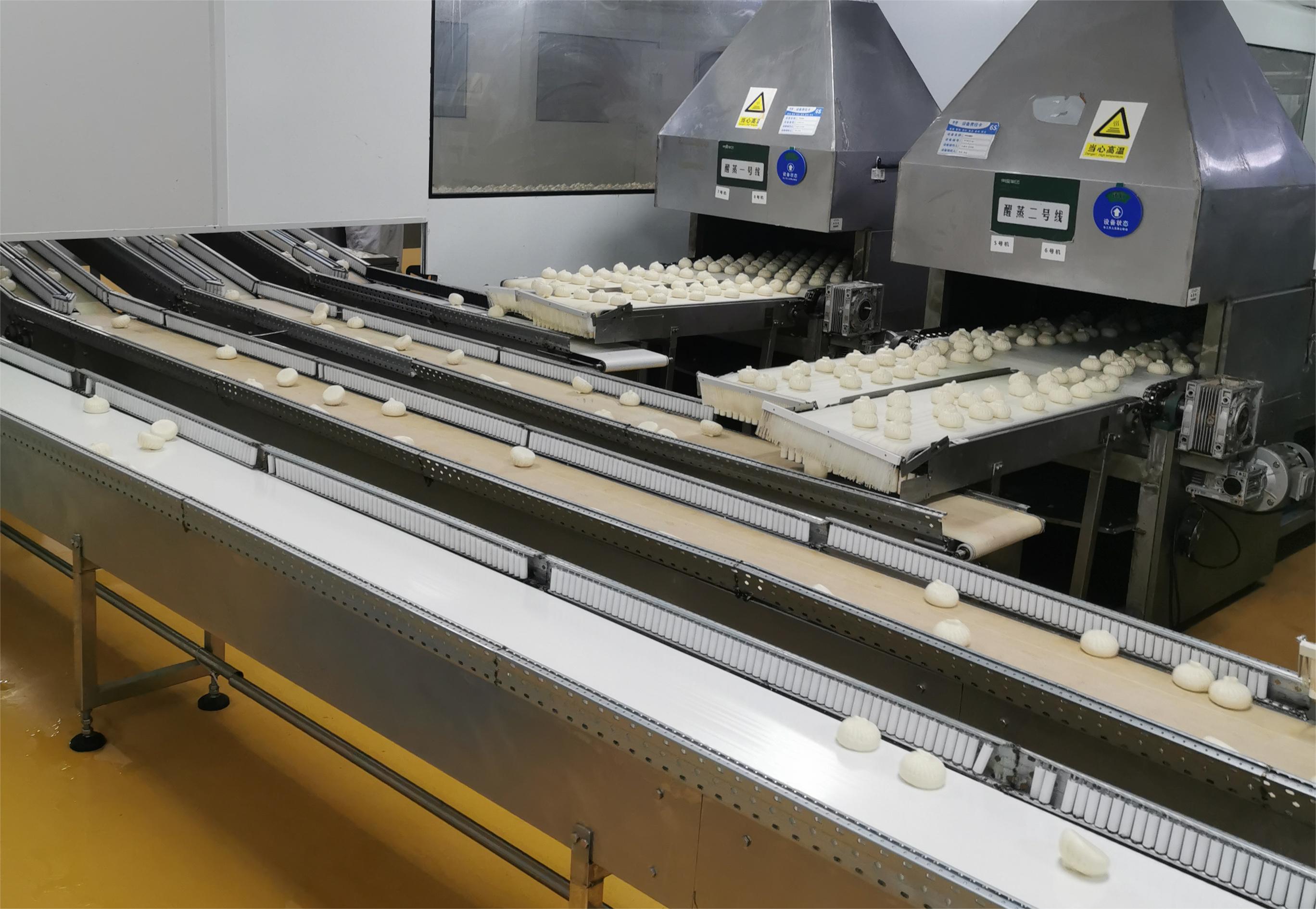
MATCHING THE CONVEYOR TO THE PRODUCT
Before deciding the conveyor path, we confirm the bun size, weight, filling, discharge temperature, production rate and required packaging condition. We also look at product spacing, room temperature, humidity and whether cooling will rely on ambient air or controlled airflow.
These details directly affect the line design:
- Larger or filled buns normally require more cooling time than smaller, unfilled products.
- Closely spaced products restrict airflow and may cool unevenly across the belt.
- A belt with insufficient open area can trap moisture beneath the product.
- Long unsupported transfers increase the risk of deformation while the bun is still soft.
- Conventional back-pressure accumulation can compress or damage unpackaged buns.
The required cooling path is confirmed from the actual product and operating conditions. It should not be copied from another line simply because the products have a similar diameter.
CONVEYOR SOLUTIONS FOR STEAMED BUN PRODUCTION
CSTRANS can combine:
- short-gap discharge conveyors for transferring soft buns from the steamer;
- open modular belts for stable support and improved air exposure;
- multi-level or spiral conveyors where a longer cooling path is required;
- lane guides designed to control position without squeezing the product;
- metering conveyors for consistent spacing before inspection and wrapping;
- separate conveyor sections for wrapped products, trays and cartons.
Where cooling performance or product release is uncertain, we recommend testing actual samples on the proposed belt and transfer arrangement. This allows belt surface, product spacing, transfer gaps and guide positions to be confirmed before the full line layout is finalized.
The objective is not to install the longest possible cooling conveyor. It is to deliver every bun to the packaging machine in a stable, repeatable condition.


